绿巨人
桥下空间变身“微运动场”_我的网站

A |
8月17日,市民在位于承德滨河湿地公园南互通高速桥下的运动场地内打乒乓球。日报记者 陈宝云摄8月17日清晨,记者来到承德滨河湿地公园。滦河边的南互通高速桥下传来乒乓球撞击台面的清脆声响,与流水声交织在一起。
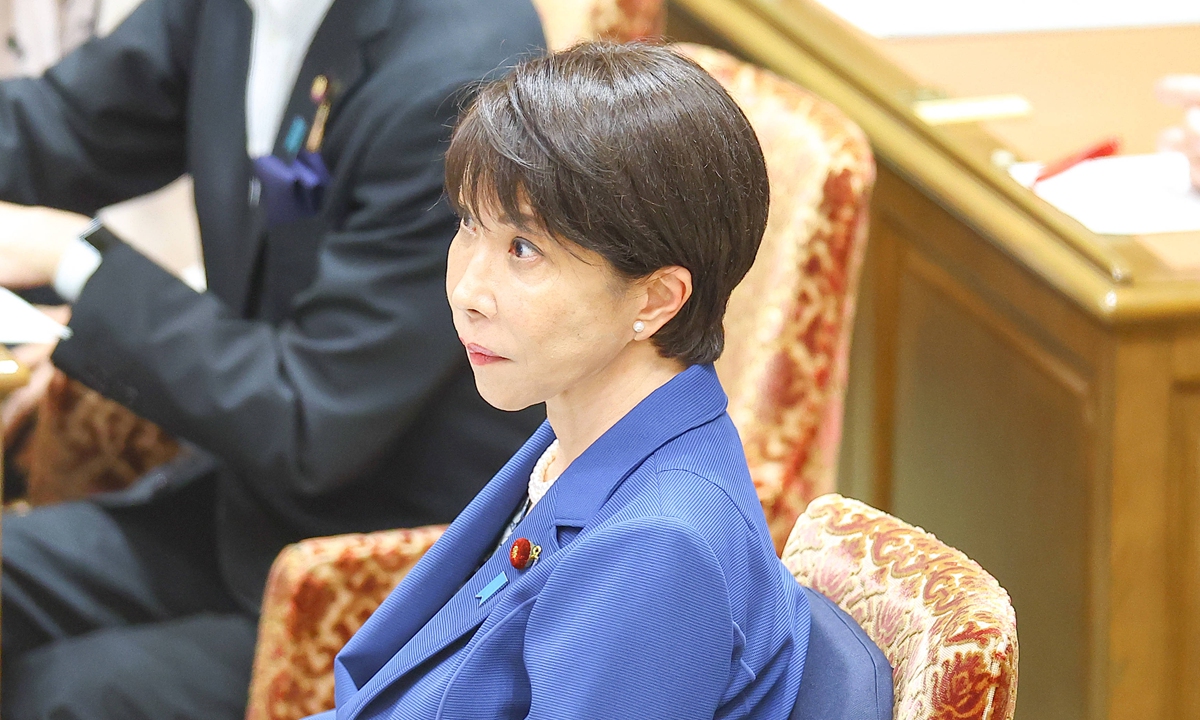
Due to concerns about fueling tension with China and South Korea, Japanese Prime Minister Sanae Takaichi is considering refraining from visiting the notorious Yasukuni Shrine, a symbol of Japanese militarism and wartime aggression, to mark the anniversary of Japan's unconditional surrender in World War II (WWII) on Saturday, Japanese media outlet Kyodo quoted sources familiar with the matter as saying on Wednesday.
Chinese experts said even if Takaichi forgoes a visit to the notorious shrine, the potential decision is merely driven by political calculations and diplomatic maneuvering, and could not be interpreted as a shift in her right-wing stance or as a sign of remorse over Japan's wartime aggression.
Such a visit to the shrine by Takaichi, a conservative known for her hawkish foreign policies, would certainly fuel tensions with China and create a rift in relations with South Korea, two countries that suffered under Japan's wartime military atrocities, Kyodo News reported.
Takaichi regularly visited the shrine before, even while serving as a Cabinet minister. But she has not visited the shrine since becoming leader of the ruling Liberal Democratic Party and prime minister in October, according to Kyodo news.
Chief Cabinet Secretary Minoru Kihara said at a press conference on August 7, when asked about a possible visit by Takaichi to the shrine around the anniversary, that "it is a matter for the prime minister to decide appropriately on her own," according to Japan's Jiji Press.
A source close to Takaichi told the Jiji that, "I don't think the prime minister will visit Yasukuni Shrine. It would complicate relations with South Korea."
Japan's Asahi TV reported that Takaichi may forgo the visit because she believes it is necessary to avoid triggering diplomatic tensions with South Korea, as well as with China.
A visit to the notorious shrine by a sitting Japanese prime minister would be a serious political incident, as it would reflect the leader's attitude toward Japan's wartime aggression and broader historical issues. Even if Takaichi chooses not to visit the shrine, it would not signal a retreat from her right-wing stance or a change in her views of Japan's wartime aggression against other countries, Lü Chao, an expert on Korean Peninsula issues at the Liaoning Academy of Social Sciences, told the Global Times. Rather, he said, the decision would largely reflect political calculations and diplomatic maneuvering.
Lü added that Takaichi could still make other symbolic gestures on the anniversary to cater to Japan's right-wing forces, whose support helped propel her to power. Such a move, he said, would underscore that her views of Japan's wartime history remain unchanged and serve as a reminder to neighboring Asian countries to remain vigilant about Japan's political direction.
Reporting on Takaichi's possible decision to forgo a visit to the shrine, South Korean newspaper Chosun Ilbo said on Wednesday that Takaichi had regularly visited the Yasukuni Shrine. "In the Liberal Democratic Party leadership election held in October last year, Takaichi also said that if appointed prime minister, she would visit the Yasukuni Shrine, noting that such visits should not become a diplomatic issue." However, since then, Takaichi has not visited in person and has only dedicated offerings in a private capacity, per the report.
In April, after Takaichi sent a ritual offering to the notorious Yasukuni Shrine, Chinese foreign ministry spokesperson Guo Jiakun said that China firmly opposes and strongly condemns Japan's latest negative moves related to Yasukuni Shrine and has lodged strong representations and protests with the Japanese side.
The Yasukuni Shrine is a spiritual tool and symbol of Japanese militarists responsible for the war of aggression. It is in fact a shrine for war criminals, noted Guo.
No sitting prime minister has gone to Yasukuni since Japan's late leader Shinzo Abe did so in 2013, drawing strong criticism from neighboring Asian countries.
Beyond Takaichi herself, some Japanese politicians and lawmakers have kept visiting the Yasukuni Shrine, triggering fierce pushback from peace advocates in Japan and the international community, Liu Jiangyong, a professor at the Institute of International Studies of Tsinghua University, told the Global Times, noting that such visits not only reflect the long-standing right-wing stance of Takaichi and other conservative politicians on historical issues, but also lay bare Japan's enduring militarist remnants.
Also in April, members of the conservative solidarity association, a group of conservatives in Japan's Liberal Democratic Party, and 166 Sanseito lawmakers from the Diet and local assemblies visited the Yasukuni war shrine.
In response, Lin Jian, Chinese foreign ministry spokesperson said that China strongly deplores and condemns such acts.
"By visiting the Yasukuni war shrine that honors Japanese Class-A war criminals year after year, these Japanese politicians seek to reverse the just verdict on Japanese aggression, and hereby whitewash Japan's war crimes and revive militarism. The Chinese people and people elsewhere who suffered under Japanese aggression will never accept that, neither will anyone in the world who stand for peace. As Japanese neo-militarism keeps gaining strength, the international community must stay on high alert and stand ready to stamp it out before it could wreak havoc in the region," said Lin.
。走进桥下空间,记者眼前一亮,这里俨然一个热闹的健身乐园。乒乓球台前,几位市民正挥拍激战。不远处的篮球场上,年轻人在晨光中运球投篮。头顶不再是冰冷的水泥面,而是绘成了蓝天白云。四周的桥柱上绘满彩画,让原本灰暗的桥下空间焕发出生机与活力。“以前桥下就是一片空地,长满杂草,没人愿意来。”正在打乒乓球的市民张旭阳说,自从这里改造成运动场地后,他几乎每天都来。“头顶‘蓝天’,身边有花有草,打球的心情都不一样了。”张旭阳说。承德地处山区,城市可用空间有限。如何在寸土寸金的山城里让市民就近运动健身?承德向“边角余料”要空间——立交桥下、河岸绿道、街角口袋公园……很多过去被忽视的“金角银边”,经过改造成为市民身边的“微运动场”。记者从承德市体育局了解到,近年来,承德在滨河湿地公园南互通高速桥下、双峰寺高速桥下、武烈河大桥下等地,建设了200余处综合运动场地,涵盖篮球场、足球场、排球场、羽毛球场、乒乓球场、轮滑场等。

B | 在武烈河沿岸的绿道,记者看到,健身步道上晨跑、散步的市民络绎不绝。河畔新增了不少智能健身器材,市民在锻炼时可实时了解运动数据。“从家走到这儿用不了10分钟,器材新、环境好,每天我都要来一趟,身心特别舒畅。

C | ”在河畔锻炼的市民李颖说。

D | 在双峰寺高速桥下,综合球类场地同样人气旺盛。足球场上,孩子们追逐奔跑;羽毛球场边,等候上场的市民排起了队。

E | “桥下晒不着淋不着,一年四季都能运动,比去体育馆还方便。”带孩子来桥下踢球的家长陈晓勇说。从“被遗忘的角落”到“家门口的运动场”,承德用“绣花功夫”盘活城市存量空间,让“15分钟健身圈”从规划图变成了市民触手可及的现实。截至目前,承德市运动场地达1.2万余个,人均场地面积约3.18平方米,经常锻炼的群众超四成,全民健身蔚然成风。(日报记者 陈宝云)。
Current article:http://p1xhbtn.xiongpeiduanlouduoennongleng.cyou/news/20260826_8730.html
Published on:05:12:28
淄博新闻


- ·宫崎英高专访:FromSoftware社长谈《The Duskbloods》受TTRPG的影响、与任天堂的合作及游戏的未来
- ·分析师:失去沃特森是大损失 约基奇巅峰又被浪费
- ·美国一男子枪杀8名亲属后自杀:共进晚餐时作案,被害者包括4名儿童
- ·新加坡不只有乌节路的詹爷爷饼干雪糕,还有这些快消失的街头小贩
- ·斯诺克英国公开赛资格赛:张安达淘汰“台球皇帝” 5名中国选手首日全员晋级
- ·詹姆斯引用中国名言却写错出处
- ·Aridge marks milestone as 1,000th flying-car propulsion unit rolls off Guangzhou production line


